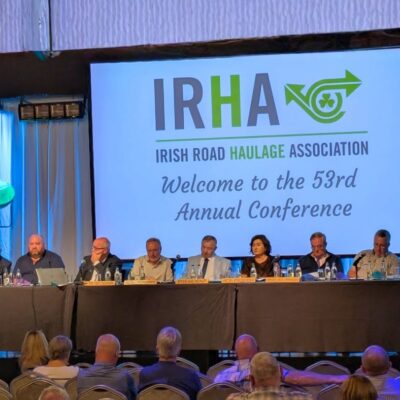

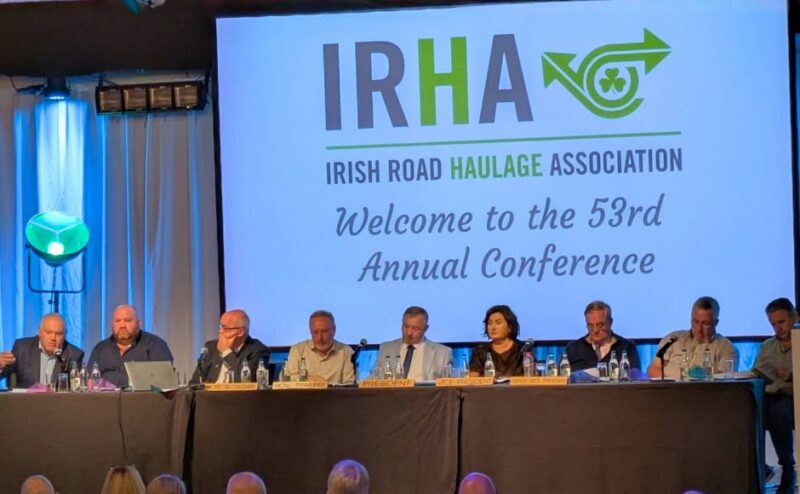
The Irish Road Haulage Association have said that government are fooling themselves if they think that fuel prices will have fallen in advance of the November 1st date at which fuel supports are due to start unwinding.
The IRHA have called on the government to take radical and decisive action on fuel policy arguing that the days of depending on imported fossil fuels from the Middle East are over.
According to Ger Hyland, President of the IRHA, it is time for Government to subsidise biofuels that can be produced within the EU. This would mean Ireland would not be as dependent on imported fuels from a volatile Middle East. It would also mean significantly lower carbon emissions, stronger energy security, and an alternative source of income for EU farmers who can produce the crops needed for EU produced biofuels.
According to IRHA President, Ger Hyland, subsidising biofuels would be cost neutral for the government in the longer term as the significant reduction in carbon emissions would mean that Ireland pays less in impending EU carbon fines.
Hyland made his comments as fuel prices crept up to €2.10 in parts of Ireland with little signs of a cooling in the price of fuel.
According to Hyland, “The view of the IRHA is that fuel prices will get worse before they get better. Government are in a difficult place. Fuel prices are not coming down in the short to medium term. The only real solution is a move away from fuels imported from volatile parts of the world and a switch to biofuels which are produced right here in the EU”
The Irish Road Haulage Association (IRHA) has, in their pre-budget submission to government, proposed two targeted fiscal measures that would encourage the immediate uptake of sustainable biofuels across the heavy goods vehicle (HGV) fleet.
HVO represents a viable and available interim solution that can deliver substantial emissions reductions in the medium term – up to 83% according to an independent Indecon report produced for the Department of Transport in 2025.
IRHA President, Ger Hyland, acknowledged that transport is currently responsible for over 20% of national greenhouse gas emissions, but argued that biofuels can be a win win solution for both government and hauliers: “If the government introduces subsidies to make biofuels a financially viable option, our industry can significantly reduce carbon emissions overnight. Government pay less EU climate fines, jobs are protected, competitiveness is maintained, and EU farmers can produce crops for biofuels on the side, creating more EU jobs and industry. It is a win win for all”